

You’re trying to jump on a Zoom call, stream something on Netflix, or just load a webpage, and your internet is crawling. Sound familiar? Slow internet is one of the most frustrating problems Australian households deal with on a daily basis, and more often than not, the cause isn’t what you’d expect.
At Brocky’s Internet Solutions, we’ve diagnosed and fixed hundreds of slow internet problems for Sunshine Coast homes and businesses. The good news is that most of these issues are fixable, quickly, affordably, and without needing to upgrade to a more expensive plan. Here’s a breakdown of the most common culprits and what you can do about each one.
Why Is My Internet So Slow? The Most Common Causes
1. Your Router Is in the Wrong Spot
This is one of the most overlooked causes of slow internet in Australian homes. If your router is tucked behind a TV cabinet, sitting inside a cupboard, or shoved in the corner of a room, your Wi-Fi signal is fighting against walls, furniture, and interference before it even reaches your devices.
A router needs to be placed in a central, elevated, open position to distribute signal evenly throughout your home. For larger homes or multi-storey properties, a single router often isn’t enough. Our Wi-Fi repair and installation service covers everything from repositioning equipment to installing whole-home mesh Wi-Fi systems that eliminate dead zones for good.
2. Your Modem or Router Is Outdated
Technology moves quickly. If your modem or router is more than five years old, there’s a good chance it doesn’t support modern Wi-Fi standards like Wi-Fi 6, or the 5GHz band that’s faster and less congested than the old 2.4GHz frequency. Older hardware also tends to overheat and throttle speeds over time without you realising it.
Upgrading your equipment is one of the most cost-effective ways to fix persistent slow internet issues, and our team can recommend and install the right hardware for your home setup and NBN connection type.
3. Too Many Devices Sharing the Same Connection
Smart TVs, laptops, tablets, phones, gaming consoles, security cameras, smart speakers, the list goes on. The average Australian household now runs more connected devices than ever before, and every single one of them takes a slice of your available bandwidth.
If multiple people in your home are streaming, gaming, or video calling at the same time, even a decent NBN plan can start to feel sluggish. Upgrading to a higher-speed tier or setting up quality of service (QoS) rules on your router can make a real difference here.
4. Interference From Other Electronics
Your Wi-Fi signal shares airspace with a surprising number of other devices, including microwaves, cordless phones, baby monitors, and even your neighbour’s Wi-Fi network. This wireless interference can cause noticeable slowdowns, especially on the 2.4GHz band.
Switching your devices to the 5GHz band where possible reduces interference significantly. If interference is a persistent problem in your area, our team can carry out a proper signal assessment and recommend solutions suited to your home’s environment.
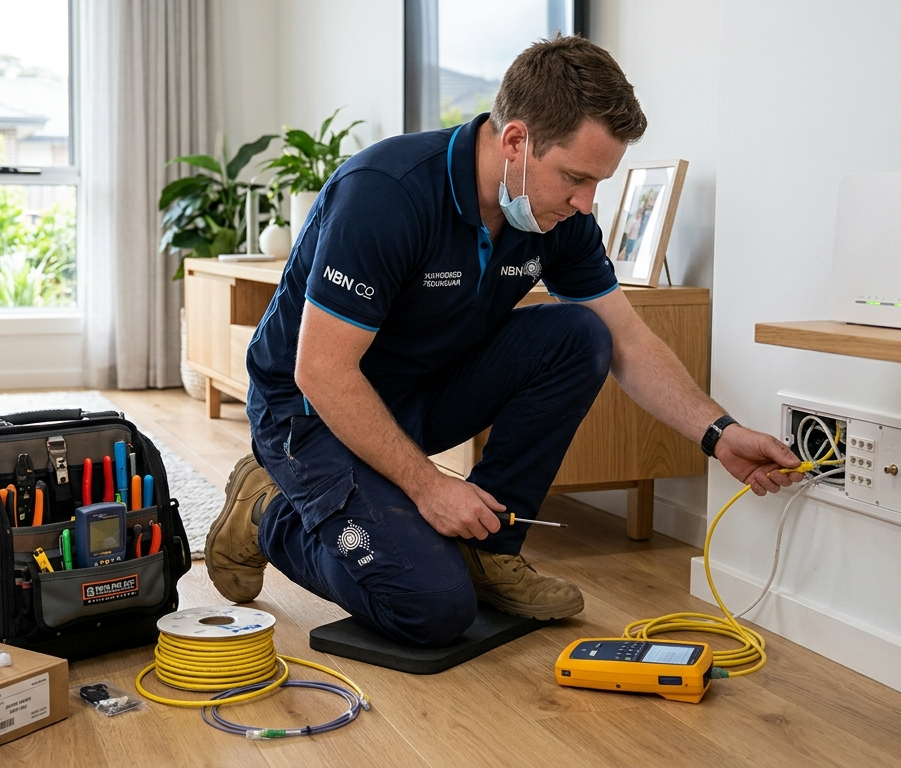
5. Faulty Cabling or Internal Wiring Issues
This one often flies under the radar. Damaged phone lines, degraded coaxial cables, or loose wall sockets can severely impact your internet speed, particularly in older Sunshine Coast homes. The issue isn’t always visible from the outside, which is why a professional inspection makes such a difference.
Our internet repair service on the Sunshine Coast includes full cabling checks and internal wiring assessments to identify exactly where signal loss is occurring and fix it properly.
6. Network Congestion at Peak Hours
If your internet slows down specifically in the evenings, say between 6pm and 10pm, you’re experiencing network congestion. This happens when large numbers of people in your area are online simultaneously and your ISP’s infrastructure can’t comfortably handle the load.
Switching to a provider with better peak-hour capacity, or using a wired Ethernet connection for bandwidth-heavy devices like gaming consoles and smart TVs, can help bypass this problem entirely.
7. Background Apps Eating Your Bandwidth
Cloud backups, operating system updates, streaming apps left running in the background, and automatic software syncs can silently chew through your bandwidth without you noticing. Checking which apps are running in the background and scheduling large updates for overnight hours is a simple habit that makes a noticeable difference.
As Norton’s guide on why your internet is so slow points out, background processes are one of the leading causes of unexplained speed drops, something many households never think to check.
8. Your NBN Plan Simply Isn’t Fast Enough
Sometimes the issue isn’t a fault at all, it’s just that your current NBN plan no longer matches your household’s actual usage. A basic 25Mbps plan that was fine two years ago may now struggle to support a family of four with multiple simultaneous streams and video calls.
As explained on Wikipedia’s page on Internet access, broadband requirements have grown significantly as online content and applications have become more bandwidth-intensive. Understanding what speed tier you actually need is the first step to solving this.
Our team can review your current plan, assess your usage patterns, and recommend whether an upgrade or a technical fix is the right answer for your situation.
Quick Tips to Speed Things Up Right Now
Not ready to book a technician just yet? Here are a few things you can try straight away:
- Restart your modem and router, unplug for 30 seconds, then plug back in
- Move your router to a more central location in your home
- Disconnect devices you’re not actively using from the network
- Switch your main devices to a wired Ethernet connection where possible
- Check if your ISP has a known outage in your area via their app or website
- Run a speed test at speedtest.net to confirm your actual speeds versus your plan speed
For a more in-depth walkthrough, our blog on tips to boost your home internet speed without upgrading your plan covers these steps and more in detail.
When DIY Fixes Aren’t Enough
If you’ve tried the basics and your internet is still underperforming, it’s time to call in a professional. Persistent slow internet is almost always the result of a technical issue that needs proper diagnosis, whether that’s a cabling fault, a configuration problem, interference from your environment, or failing hardware.
At Brocky’s Internet Solutions, we provide comprehensive internet and Wi-Fi solutions for Sunshine Coast homes and businesses. From signal assessments and cabling repairs to full network upgrades, we get to the root of the problem and fix it properly.
Want to know what other Sunshine Coast locals think of our service? Check out what our satisfied customers have to say before you book.
Get Fast, Reliable Internet Back Today
Don’t put up with a sluggish connection any longer. The team at Brocky’s Internet Solutions is ready to diagnose and fix your slow internet problem fast, with upfront pricing and no-nonsense advice.
Visit us at 6/12 Newspaper Place, Maroochydore QLD 4558, call us on 1800 588 688 or text 0422 394 174, Monday to Friday between 8:30am and 4:00pm.
Contact us today to book your internet assessment or get a quote. Fast, reliable internet is closer than you think.
FAQs
1. Why is my internet slow even though I’m paying for a fast NBN plan?
A fast plan doesn’t automatically mean fast internet at your device. Factors like outdated hardware, poor router placement, faulty cabling, or Wi-Fi interference can all reduce your actual speeds well below what your plan promises.
2. Does the number of devices on my network really slow things down?
Yes, significantly. Every connected device shares your total bandwidth. The more devices actively using the network at once, the slower each individual connection becomes. This is especially noticeable during peak household hours.
3. Is slow internet at peak hours my ISP’s fault?
Often, yes. Network congestion during evenings is a known issue with some NBN providers who oversell their capacity. Switching providers or upgrading to a higher-tier plan with better peak-hour performance can help.
4. How do I know if my cabling is causing my slow internet?
If your internet speed varies significantly between rooms, drops when it rains, or is dramatically faster when connected directly to your modem via Ethernet, internal cabling is likely a contributing factor. A professional cabling inspection will confirm this.
5. Can a Wi-Fi booster fix my slow internet?
A booster can improve coverage and reduce dead zones, but it won’t fix underlying cabling faults, hardware issues, or plan limitations. It’s best used as part of a properly designed network solution, not as a standalone fix.
One thought on “Slow Internet on the Sunshine Coast? Here’s What’s Really Causing It”
Comments are closed.