
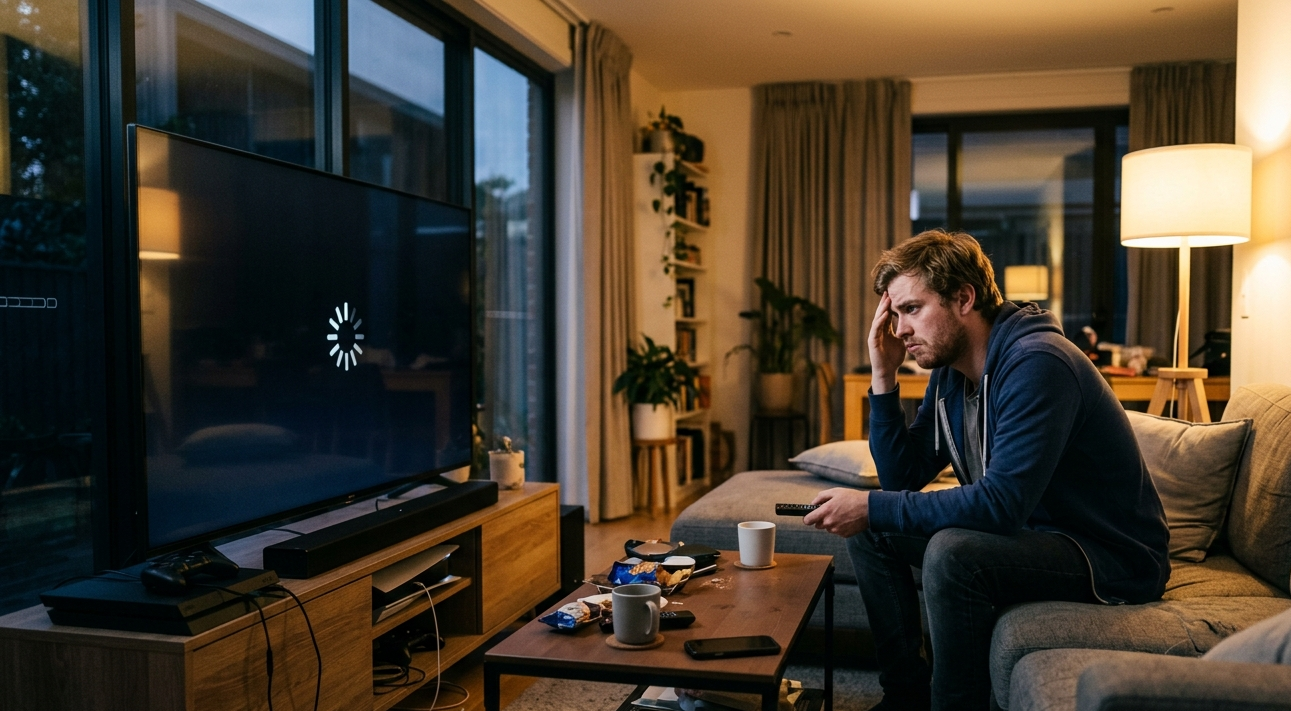
You’re settled in for a big night of Netflix, the footy is on, or you’re halfway through a show with the family, and then it happens. The screen freezes, the spinning circle appears, and everything grinds to a halt. Streaming buffering issues are genuinely frustrating, and the automatic assumption is that your NBN plan isn’t fast enough.
But here’s the truth most people don’t realise: in the majority of cases, your internet plan has nothing to do with it. At Brocky’s Internet Solutions, we’ve helped hundreds of Sunshine Coast households solve exactly these problems. The fix is almost never upgrading to a more expensive plan. Here’s what’s actually going on.
What Is Buffering and Why Does It Happen?
Before diagnosing the cause, it helps to understand what buffering actually is. As Cloudflare’s explanation of what buffering means explains, streaming services pre-load segments of video data ahead of playback to ensure smooth viewing. When your device can’t receive that data fast enough, playback pauses while it catches up. That pause is buffering.
The key insight is that buffering is caused by data not arriving fast enough at your device, not necessarily by a slow overall internet connection. The bottleneck can be anywhere between the streaming server and your screen, and most of the time it’s somewhere inside your home network rather than the NBN connection itself.
The Real Causes of Streaming Buffering Issues
1. Weak Wi-Fi Signal Between Your Router and Streaming Device
This is the single most common cause of streaming buffering issues we diagnose on the Sunshine Coast. Your NBN plan might deliver 100 Mbps to your router, but if your smart TV or streaming stick is receiving a weak, congested Wi-Fi signal in another room, it’s working with a fraction of that speed.
Signs this is your problem:
- Buffering happens in certain rooms but not others
- Moving closer to the router improves streaming quality
- Other devices close to the router stream fine while the lounge TV buffers
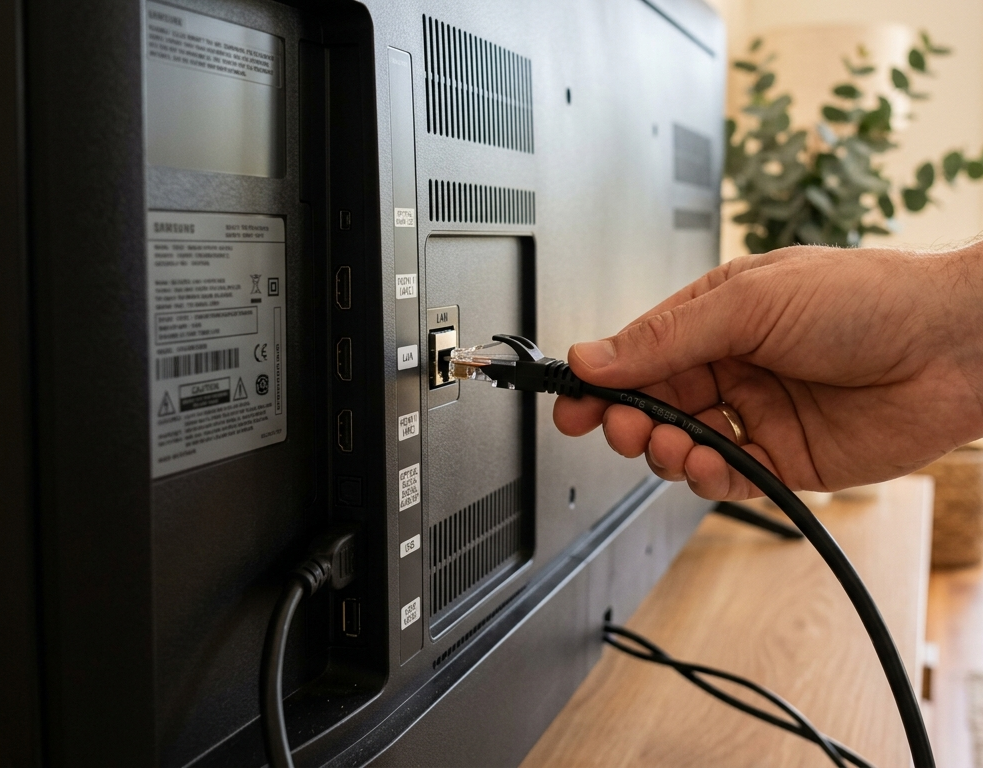
The fix: connect your streaming device via Ethernet cable wherever possible. If that’s not practical, a mesh WiFi system or a dedicated access point near your viewing area resolves this reliably.
2. Network Congestion During Peak Hours
If your streaming buffering issues happen specifically in the evenings, between about 6pm and 10pm, you’re most likely experiencing network congestion. This happens at two levels: within your home when multiple devices compete for bandwidth, and at your ISP’s infrastructure when large numbers of customers are online simultaneously.
What helps at home:
- Pause cloud backups and software updates during streaming sessions
- Enable Quality of Service (QoS) settings on your router to prioritise video traffic
- Connect high-demand devices like gaming consoles via Ethernet to free up Wi-Fi bandwidth
- Schedule automatic updates for overnight hours
If ISP congestion is the issue, switching to a provider with better peak-hour infrastructure is sometimes the right answer. But confirm home network congestion isn’t the actual culprit first.
3. Outdated Router or Streaming Device Hardware
An older router that predates Wi-Fi 5 or Wi-Fi 6 standards struggles to handle multiple simultaneous streaming sessions efficiently. Similarly, older smart TVs, streaming sticks, and set-top boxes may not have the processing power to decode modern high-definition content without buffering.
How to identify hardware as the cause:
- Buffering happens on one device but not others using the same network
- Performance improves significantly when the device is restarted
- The device struggles specifically with 4K content but streams 1080p smoothly
If your router is more than four to five years old, replacing it with a quality Wi-Fi 6 model makes a noticeable difference to whole-home streaming performance. Our blog on best router placement for maximum signal strength covers the hardware and positioning factors that affect streaming most directly.
4. Too Many Devices Sharing the Network Simultaneously
Every device actively using your network takes a portion of your available bandwidth. Smart TVs streaming 4K content, gaming consoles downloading updates, phones on social media, tablets video calling, and smart home devices all contribute to your total household network load.
As Wikipedia’s overview of streaming media explains, video streaming is one of the most bandwidth-intensive activities on a home network, and multiple simultaneous streams can saturate even a fast connection if the network isn’t properly managed.
Steps that help:
- Disconnect devices you’re not actively using from the network
- Set streaming quality to 1080p rather than 4K when bandwidth is limited
- Use the 5 GHz band for streaming devices and 2.4 GHz for smart home gadgets
- Consider a router with dedicated IoT network support to separate device categories
5. Video Quality Set Too High for Available Bandwidth
4K streaming on Netflix or Stan requires a consistent 25 Mbps connection minimum per stream. If multiple devices are streaming simultaneously, or your Wi-Fi signal is delivering less than the full plan speed to your device, the platform reduces resolution, increases buffering, or both.
The quickest test: switch your streaming quality from 4K to 1080p and see whether buffering disappears. If it does, bandwidth at the device rather than your overall plan speed is the constraint.
6. Streaming Platform Server Issues
Occasionally the problem genuinely isn’t in your home at all. Streaming platform servers get overloaded, particularly during major event releases or peak viewing times. When this happens, buffering occurs regardless of how good your connection and equipment are.
How to confirm it’s the platform and not your network:
- Try a different streaming service and see if buffering continues
- Check the platform’s social media or status page for reported outages
- If only one service buffers while others stream fine, the issue is on their end
This situation resolves itself without any action required from you.
7. Faulty Cabling or Internet Connection Issues
If every device in the house buffers regardless of what you try, the problem may be with your NBN connection or internal cabling rather than the home network setup. This is less common but does occur, particularly in older Sunshine Coast properties with aged internal wiring.
Signs of a connection-level issue:
- Buffering and dropouts affect every device simultaneously
- Speed tests on a wired connection show significantly lower speeds than your plan
- The problem persists after restarting both the modem and router
Our internet repair service on the Sunshine Coast covers full connection diagnostics, cabling assessment, and modem testing to identify and resolve exactly these kinds of faults.
Quick Fixes to Try Right Now
Before calling anyone, these steps resolve streaming buffering issues for many households:
- Restart your modem, router, and streaming device completely
- Connect your streaming device to Ethernet rather than Wi-Fi
- Lower the streaming quality from 4K to 1080p in your app settings
- Close other apps and disconnect unused devices from the network
- Move the router to a more central position in your home
- Check if the platform has a reported outage before troubleshooting further
If these steps don’t resolve the problem, or if it returns quickly after a temporary fix, a professional network assessment is the fastest path to a permanent solution.
Get Buffer-Free Streaming on the Sunshine Coast
Don’t keep putting up with streaming buffering issues that disrupt your viewing every night. Whether it’s a Wi-Fi coverage problem, outdated hardware, or a connection fault, the team at Brocky’s Internet Solutions diagnoses and fixes these issues properly.
See what our Sunshine Coast customers say by checking out what our customers think before you get in touch.
Visit us at 6/12 Newspaper Place, Maroochydore QLD 4558, call us on 1800 588 688 or text 0422 394 174, Monday to Friday between 8:30am and 4:00pm.
Get in touch to book your internet or WiFi assessment and get your streaming sorted properly.
FAQs
1. Why do I get streaming buffering issues even with a fast NBN plan?
A fast plan doesn’t guarantee smooth streaming at your device. Weak Wi-Fi signal, network congestion, outdated hardware, or too many active devices are the most common real causes.
2. Why does buffering only happen in the evenings?
Evening buffering is usually peak-hour congestion, either from multiple devices at home or your ISP’s network under heavy load. QoS settings and device management help significantly.
3. Will connecting via Ethernet fix my buffering?
For most households, yes. A wired connection bypasses Wi-Fi issues entirely and delivers your full plan speed directly to the streaming device.
4. How do I know if my router is causing the problem?
If your router is more than four to five years old, doesn’t support Wi-Fi 5 or 6, or struggles when multiple devices are active, it’s likely a contributing factor.
5. Does lowering streaming quality help with buffering?
Yes. If buffering disappears when you drop from 4K to 1080p, bandwidth at the device rather than your overall plan speed is the constraint.